
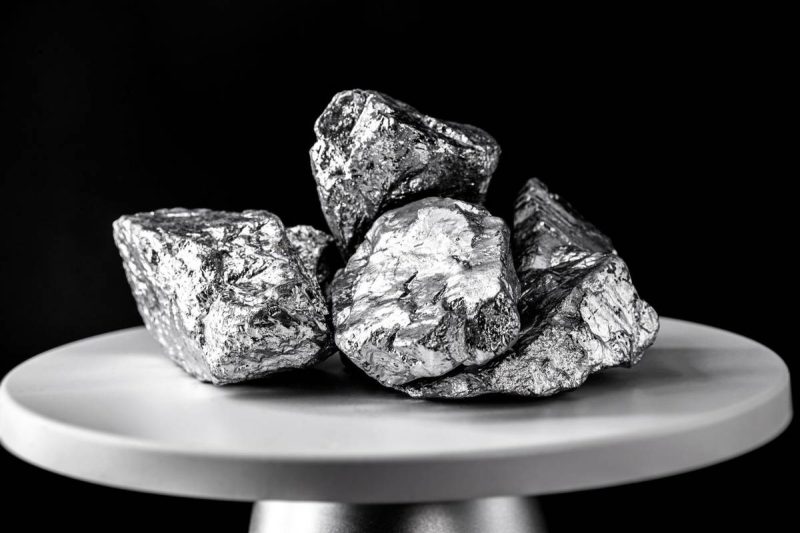
Platinum may be rare, but it is the third most-traded precious metal in the world, behind gold and silver.
The world’s platinum demand varies widely across many sectors. Most notably, platinum metal is used in autocatalysts and jewelry, as well as for medical and industrial purposes. Those interested in investing in platinum would do well to be aware of the many platinum uses. After all, by knowing which industries require platinum, it’s possible to understand supply and demand dynamics, and to be aware of how the precious metal’s price may move in the future.
With that in mind, here’s a list of the four main platinum uses. Scroll on to learn more about platinum’s key applications.
In this article
1. Autocatalysts
One of the main platinum uses is in the construction of autocatalysts. An autocatalyst is a “cylinder of circular or elliptical cross section made from ceramic or metal formed into a fine honeycomb and coated with a solution of chemicals and platinum group metals.” An autocatalyst mounted inside a stainless steel canister is known as a catalytic converter.
Catalytic converters are installed in a vehicle’s exhaust lines, between the engine and muffler, where they are used to moderate the dangerous qualities of exhaust. Specifically, the autocatalysts that vehicles contain convert over 90 percent of hydrocarbons and carbon monoxide into carbon dioxide, nitrogen and water vapor. They can also convert pollutants from diesel exhaust into carbon dioxide and water vapor, which is immensely helpful in reducing pollution.
Autocatalysts have been used in the US and Japan since 1974, and are now so common that over 95 percent of new vehicles sold each year have one. As a result, they are a significant source of platinum demand that is not likely to disappear in the future. Indeed, as pollution rules become more stringent, car companies are looking at creating even more efficient autocatalysts.
According to data from the World Platinum Investment Council (WPIC), automotive demand is forecasted to fall 3 percent to 3.02 million ounces in 2025 before falling another 3 percent to 2.92 million ounces in 2026.
2. Platinum jewelry
Platinum has many qualities that make it ideal for use in jewelry, and that is the second largest source of platinum demand. The metal is strong, resists tarnish and can repeatedly be heated and cooled without hardening or oxidizing.
When used to make jewelry, platinum is commonly alloyed with other platinum-group metals such as palladium, as well as copper and cobalt, so that it is easier to work with.
The history of platinum jewelry is long. More than 2,000 years ago, Indigenous people in South America made rings and ornaments out of platinum. Egyptians used platinum for decoration as early as the 7th century BCE. Meanwhile, Europeans began to use the metal in jewelry in the 18th century. Currently, China is the largest market for platinum jewelry.
The WPIC expected platinum demand for jewelry was expected to increase 7 percent year-over-year to 2.16 million ounces in 2025, then decline 6 percent in 2026 to 2.04 million ounces.
3. Industrial applications
Platinum’s industrial applications could fill a book all on their own. For instance, platinum catalysts are used to manufacture fertilizer ingredients, and the metal is a key component in silicones, hard disks, electronics, dental restoration, glass-manufacturing equipment and sensors in home safety devices.
Another platinum use is in the construction of hard drives with extremely high storage densities. And, because it is reactive to oxygen, oxides of nitrogen and carbon monoxide, platinum can be used to detect changes in the amount of those materials in vehicles and buildings. For the same reason, platinum is also used in medical sensors, particularly medical instruments that measure blood gases, to detect oxygen.
Among growing segments is platinum’s use as a catalyst in the production of green hydrogen. Similar to how the metal is used to convert automotive pollutants, it can also be used as an electrolyzer to convert water into hydrogen and oxygen, with the resulting hydrogen usable in emission-free fuel cell vehicles. In 2025, demand from hydrogen production is predicted to grow by 20 percent to 50 million ounces, then increasing another 36 percent in 2026 to 58,000 ounces.
Overall, WPIC forecast that industrial demand for platinum, including medical demand, would fall 22 percent to 1.9 million ounces in 2025 before growing 9 percent to 2.08 million ounces in 2026.
4. Medical applications
Platinum is used in electronic medical devices like those mentioned above, as well as in catheters, stents and neuromodulation devices. It is ideal for these applications because of its durability, conductivity and biocompatibility. The metal is also inert within the body, making it safe for implantation.
To meet other medical needs, platinum can be formed into rods, wires, ribbons, sheets and micromachined parts. Further, it helps fight cancer in the drugs cisplatin and carboplatin, which are widely used to treat testicular cancer, as well as ovarian, breast and lung cancer tumors.
Medical demand for platinum has increased in recent years, and is forecast to rise 4 percent to 320,000 ounces in 2025 and another 4 percent to 322,000 ounces in 2026.
FAQs about platinum
How much is platinum worth?
In 2026, the price of platinum has spiked significantly as part of a precious metals bull market trading as high as US$2,900. In 2025, the PGM ranged between US$960 and US$1,900 per ounce.
Although the industry is facing a growing supply deficit, it is also dealing with lagging demand. The shortfall in supply is related to a hangover from COVID-19 lockdowns, Russia’s war in Ukraine and ongoing electricity shortages and railway issues in the top platinum producing country South Africa. Russia typically ranks as the world’s second largest platinum-producing country.
Meanwhile, economic pressures worldwide have weighed on demand for platinum from the automotive industry. However, the same economic challenges have led to less demand for electric vehicles, which don’t require platinum-laden catalytic converters.
Which is more valuable, gold or platinum? Why?
Platinum in general has historically traded on par or at a premium to gold, but since 2015 the two metals have diverged in price, with gold taking the high road. This split has been attributed to gold’s safe-haven status and platinum’s reliance on the industrial and jewelry markets, which don’t fare well in times of economic uncertainty.
This has led to increasing demand for platinum jewelry as a cheaper alternative to gold jewelry.
Although platinum is 30 times rarer than gold, much harder to mine and in high demand due to its important industrial uses, precious metal gold has long been valued as a form of currency and a store of wealth. The gold price is almost double the price of platinum in 2026.
What’s the best investment, gold or platinum?
Both gold and platinum have wealth-generating potential, but it’s important to determine which precious metals fit your investment strategy; consider looking at supply, demand and prices for each option before making a decision.
To learn more, check out our article What is the Best Precious Metal to Invest In?
Securities Disclosure: I, Melissa Pistilli, hold no direct investment interest in any company mentioned in this article.